
frequently asked questions
General Questions
-
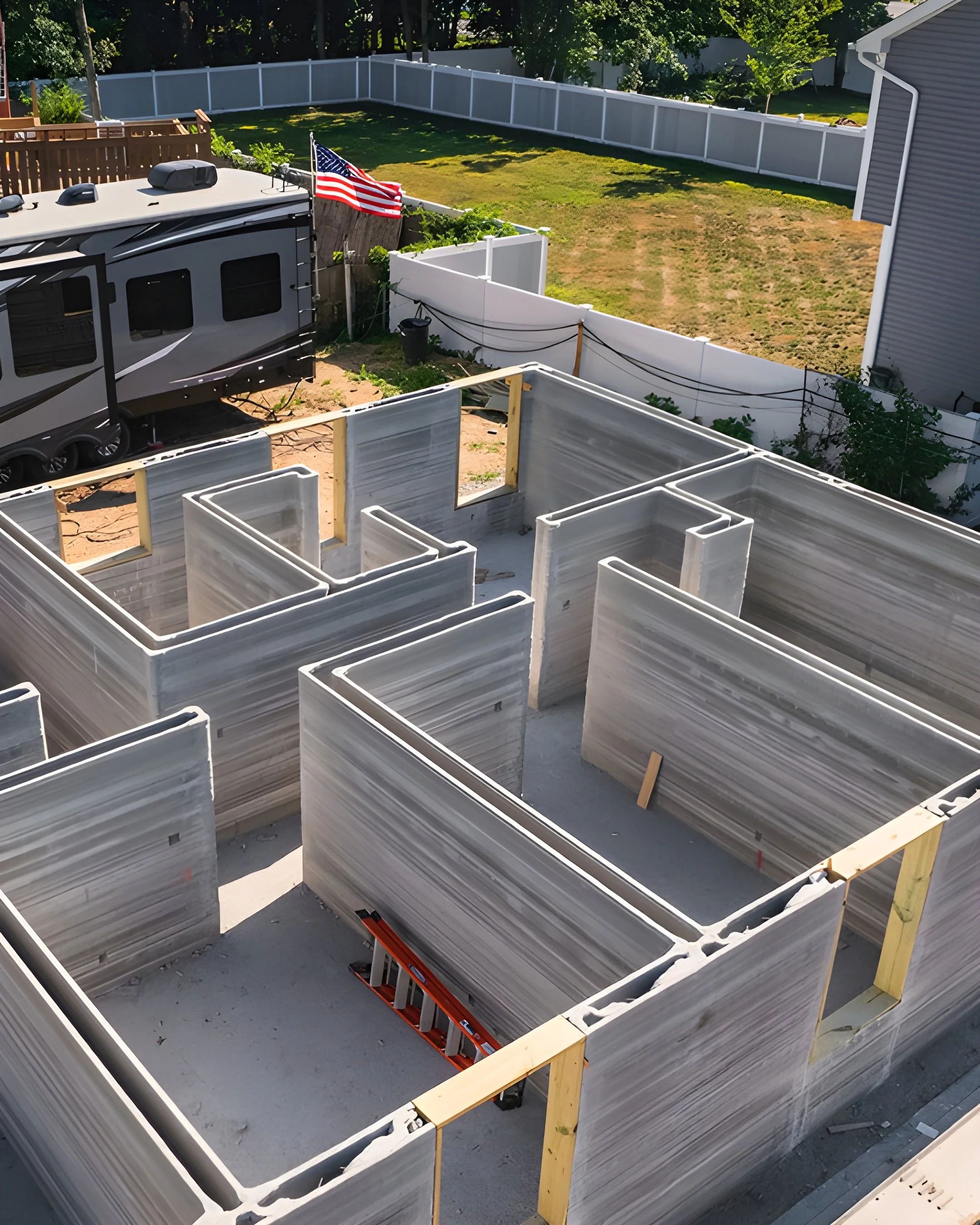
3D-printed concrete construction uses specialized equipment to place concrete layer by layer based on a digital design. Instead of forming every wall with traditional methods, the printer follows a planned path to build the structure or wall system.
-
Yes. The printed structure is made with concrete-based material and is designed to become part of a durable building system. Like any structure, the final design must account for engineering, reinforcement, openings, roof systems, utilities, and local code requirements.
-
3D printing can be used for homes, accessory buildings, small commercial structures, architectural walls, specialty structures, and certain development projects. The best fit depends on the design, site conditions, budget, and project goals.
Design & Appearance
-
The natural printed finish usually shows horizontal layers. Some clients like that look because it highlights the technology. Other finishes may be possible depending on the project, including coatings, stucco-style finishes, or other exterior treatments.
-
Yes. Curves and custom wall shapes are one of the major advantages of 3D printing. The process can create forms that would be more difficult or expensive with traditional formwork.
-
Yes, but the design must be reviewed for printability. Wall layout, openings, roof connection points, utilities, reinforcement, and construction sequencing all need to be considered before printing.
Strength & Durability
-
3D-printed concrete structures are designed around the strength and durability of concrete. Final performance depends on the material mix, engineering, reinforcement, wall design, and construction details.
-
They can be designed to meet applicable building standards when properly engineered, permitted, and constructed. Safety depends on the full building system, not just the printed walls.
-
Concrete structures are known for long service life when properly designed, maintained, and protected from moisture and environmental exposure. Actual lifespan depends on design, climate, materials, maintenance, and construction quality.
-
Often, yes. Reinforcement requirements depend on the structure, code, engineering, wall design, and intended use. 3D printing changes the wall-building process, but it does not eliminate the need for proper structural design.
Construction Process
-
The project starts with design review and digital planning. The structure is then converted into print paths. On site, the printer places concrete layer by layer. After printing, the structure moves into build-out, including openings, utilities, roofing, finishes, and final construction details. Current projections are 4-6 months per project.
-
Printing can be significantly faster than some traditional wall-building methods, but total project time depends on the size, design complexity, site conditions, weather, inspections, and the remaining build-out work. Current projections put printing time at 2-3 weeks for standard projects.
-
Usually, no. The slab or foundation as well as the wall system or shell may be printed, while other parts of the building, such as the roof, windows, doors, mechanical systems, electrical, plumbing, and interior finishes, are completed using traditional construction methods.
-
Not always. The site needs to be evaluated for access, layout, ground conditions, equipment setup, material delivery, weather exposure, and safety requirements.
Cost & Timeline
-
It depends on the project. 3D printing can reduce certain labor, formwork, and material waste, but cost savings vary based on design, location, engineering, permitting, finish level, and project scale.
-
Major cost factors include structure size, wall complexity, engineering requirements, site conditions, mobilization, material needs, openings, reinforcement, roof design, finishes, and local permitting requirements.
-
It can work for both, but repeated designs or multi-structure projects may create better efficiency because digital planning, mobilization, and construction workflows can be repeated.
-
As early as possible. 3D printing works best when printability, wall layouts, openings, utilities, and structural details are considered before the project is fully designed.
Permits & Building Codes
-
Yes, but they must be reviewed under applicable local codes and requirements. Engineering, inspections, structural design, and documentation are important parts of the approval process.
-
That depends on the local building department and project details. Some jurisdictions may require additional documentation, engineering review, or clarification because the method is newer than traditional construction.
-
Yes. Structural engineering is typically required to confirm that the building system meets the necessary strength, safety, and code requirements.
Energy & comfort
-
They can be part of an energy-efficient building system. Energy performance depends on wall design, insulation strategy, air sealing, windows, roof system, HVAC design, and climate.
-
Concrete has thermal mass, which can help moderate temperature swings when used correctly. However, insulation and full building-envelope design are still critical.
-
Concrete wall systems can provide good sound resistance, but actual acoustic performance depends on the wall assembly, insulation, openings, windows, doors, roof system, and interior finishes.
Project Fit
-
A project review is the best first step. Nomads3D can evaluate the structure type, design goals, location, site access, timeline, and budget to determine whether 3D-printed concrete is practical.
-
Helpful information includes project location, structure type, approximate size, intended use, design drawings if available, timeline, budget range, site photos, and any special design goals.
-
Yes. 3D-printed concrete projects often work best when the owner, designer, engineer, builder, and printing team coordinate early.
-
Yes. Some projects may use 3D-printed concrete for specific wall systems, architectural features, accessory structures, or specialty components rather than the entire building shell.
Still have questions? Please send us an email with additional questions. If you’re ready, go ahead and fill out the contact form.